


Sant’Ambrogio Convent Scandal: Sex, Power, and Murder Inside the Vatican Archives and Nuns Scandal History

The image of the "naughty nun" is often dismissed as a prurient fantasy of anti-Catholic bigots or those who harbor a deep-seated resentment toward the Church’s traditional structures. In popular culture, the life of a nun is frequently caricatured as either a sterile existence of carrot-peeling and quiet obedience or a backdrop for Gothic horror. However, history often proves more lurid than fiction. In 1998, a decision by Pope John Paul II turned the academic world into a high-stakes scavenger hunt when he took the unprecedented step of opening the archives of the Holy Inquisition to scholars. This was the moment historians like Carlo Ginzburg had long campaigned for, a chance to walk into the "Chocolate Factory" of secret documents and hope to win the jackpot of hidden truths.
Among the countless bundles of paper, one discovery in particular stood out: a two-meter-high stack of documents detailing a forgotten scandal at the Roman convent of Sant’Ambrogio della Massima. What researchers initially expected to be a dry record of a trial against "false saints" turned out to be a bluntly erotic thriller. It was a story of sex, devil-worship, and cold-blooded murder, set not in the deep Middle Ages, but in the practically modern 19th century. Through the study of these files, we can peer behind the walls of Sant’Ambrogio to see how a closed system of power, isolated from the outside world, can transform a house of prayer into a house of horrors.
Why Convents Became Overcrowded
To understand the tragedy of Sant’Ambrogio, one must understand the social mechanics of 19th-century Italy. Historically, young women entered convents not primarily out of a burning sense of religious vocation, but as a result of a cold economic calculus. An old Italian proverb stated that a woman should have "either a husband or a wall", the wall, of course, being the wall of a monastery. Providing a dowry for a marriage was an expensive endeavor for noble and middle-class families alike. If a family had multiple daughters, finding husbands for all of them was often financially ruinous.
The solution was a grim "daughter question": one daughter would be married off, while the others were shipped to convents. While convents also required a dowry (often called a dowry for the "Bride of Christ"), the fee for a non-elite institution was significantly lower than the cost of a secular marriage. By the 17th century in Milan, three-quarters of women of noble birth had become nuns. These institutions were not merely filled with sisters in Christ, but with actual sisters, aunts, and nieces, creating dense, insular family networks within the cloisters. When a young girl said she was going to "visit family," she was frequently being sent to a convent where she would be "tenderly prepared" for the day she would inevitably enter it herself.
For centuries, these "sepolte vive" (buried alive) lived in a parallel society. The Vatican’s decision to open the archives allowed historians to finally verify the rumors that had circulated for decades. The immediate reaction of the researchers examining the Sant’Ambrogio files was one of shock: the depth of the corruption was not what anyone had anticipated. The files revealed that under the "watchful eye" of the Pope, a sophisticated system of abuse had flourished in the heart of Rome.
Convent Life: The Closed System
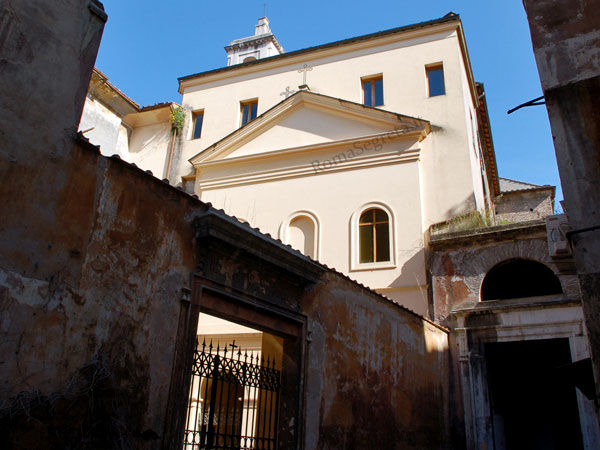
Sant’Ambrogio della Massima was a Franciscan convent of the "strictest order". Its name possibly derived from the Cloaca Maxima, ancient Rome's grand sewage system, a detail that adds a dark, ironic layer to the rot found within its walls. The nuns lived in total isolation from the world, governed by strict mechanics designed to minimize contact with the outside. The parlatorio (parlatory) was the only meeting place, a small room where a nun and a guest would talk through a metal grate, never actually touching.

For the delivery of supplies and correspondence, there was the ruota (the wheel), a rotating wooden drum built into the wall. There are even tales of particularly small nuns using the ruota to sneak out on unauthorized leaves. This mechanism was also used by relatives to pass infants into the convent so that aunties and grandmothers could see them; if the infant was a girl, she might be handed back through the wheel seven years later to begin her own life as a ward of the Church.
Within this closed system, emotional repression was the law.
Female friendship was discouraged; nuns were forbidden from walking hand-in-hand or sleeping in the same cell. Even the presence of animals was strictly regulated. Nuns were forbidden from keeping male animals, with the bizarre exception of silkworms, because they were profitable and supposedly did not "provoke sensuality". Small dogs were sometimes permitted, but never male ones.
The Church’s obsession with controlling sexuality and potential "unnatural" behavior extended even to the names of the sisters. A somewhat funny historical rumor concerns an inspector in Bologna during the 17th century. To his absolute horror, he discovered a nun who had taken the name "Sister Lesbia Ildibrando". Fearing the suggestive connotations of the name, he ordered her immediately renamed to Sister Maria Teresa.
The only male allowed regular access to the nuns was the father confessor. This created a dangerous power dynamic. In an environment where normal social ties were severed, the hierarchy of the convent and the relationship with the confessor replaced all other human interaction. For some, this discipline triggered rebellion, nuns in other institutions were known to dance the tarantella in secret, risk excommunication to sneak out and hear the opera, or even invoke the Devil to find a stolen musical instrument. But in Sant’Ambrogio, the repression led not to rebellion, but to a descent into a perverse internal world where the lines between the spiritual and the carnal became irrevocably blurred.
Sant’Ambrogio Before the Collapse
The catalyst for the scandal was Maria Luisa, born Maria Riedel. She was the daughter of a poor confectioner, a girl who had lost her mother early and finished only a few years of school. At thirteen, she entered Sant’Ambrogio on a grant for low-income girls, and by fourteen, she was a professed nun. Her beauty was legendary, even hardened Inquisitors would later be struck by her "irresistible charm" and "angelic looks".
Maria Luisa was highly ambitious. By the age of twenty-seven, she had climbed the ladder to become the mistress of novices and the vicaress, making her the second most powerful person in the convent. However, the files show that she was the true master of the institution, with the elderly abbess, Maria Veronica, effectively under her thumb. Maria Luisa’s rise was fueled by a "pretense of holiness." She claimed to have visions of Jesus and the Virgin Mary, convincing her sisters that she lived on air alone. In reality, she was frequently caught snacking on salami and mortadella in the kitchen at night, following the example of a previous "false saint," Benedetta Carlini, who was also known to steal food during her "fasts".
To solidify her power, she used "divine" messages to manipulate convent elections. If a prestigious position like that of the portress opened up, Maria Luisa would conveniently have a vision in which the Lord declared that she was the only fit candidate. The other nuns, too superstitious to argue with God, would vote accordingly. She even faked letters from the Virgin Mary, dictating them to a novice with beautiful handwriting. One such letter to a confessor even boasted about the "wonderful scent" of Maria Luisa, the Virgin’s "first-born daughter".
The system she created was a "belief bubble" of absolute obedience and shared delusion. To ensure the loyalty of the young novices, she instituted lesbian initiation rites, requiring them to spend the night in her bed before taking their final vows. When nuns questioned these acts, she had a range of ready-made excuses: it was God’s will to humble them, or she was a "disembodied being" whose touch was purely spiritual. If all else failed, she blamed the Devil, claiming that Satan had taken on her form to harass them and discredit her "pure soul". One particularly spicy and disturbing rumor mentioned by a witness, Agnese Elitta, claimed that Maria Luisa was the source of a "mysterious liquid" that settled in her groin area, which other nuns were allegedly encouraged to touch for "healing".
The Breaking Point (Katharina, Poisonings, Exposure)
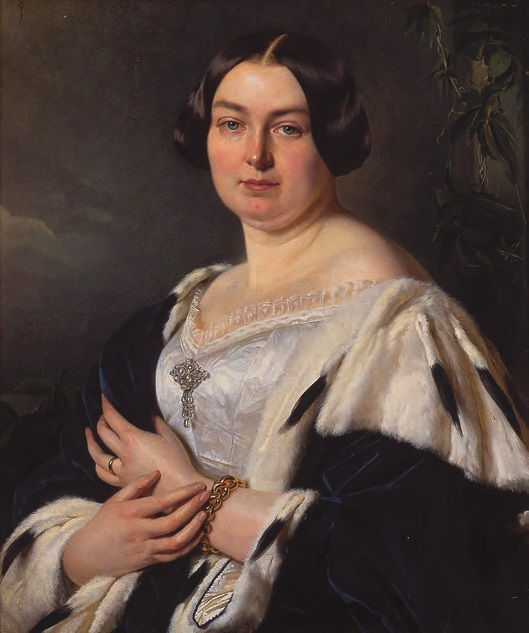
The bubble finally burst with the arrival of Princess Katharina von Hohenzollern-Sigmaringen in 1858. Katharina was a widow of high standing, a German noblewoman who was older, more educated, and far more cynical than the simple Italian girls Maria Luisa was used to manipulating.
Katharina’s journey to the cloister was fraught with personal tragedy. Her first husband, Count Erwin von Ingelheim, died young. Her second husband, Prince Karl, died of typhus in Bologna on March 11, 1853, while they were traveling. Left a widow for a second time at thirty-six, she resolved to fulfill her childhood dream of becoming a nun.
Before arriving in Rome, Katharina had already experienced failure in the religious life. She joined the community of the Dames du Sacré-Cœur in Kintzheim, Alsace, in 1853. However, the rigorous schedule and the demands of teaching proved too much for her; she fell gravely ill and was forced to withdraw.
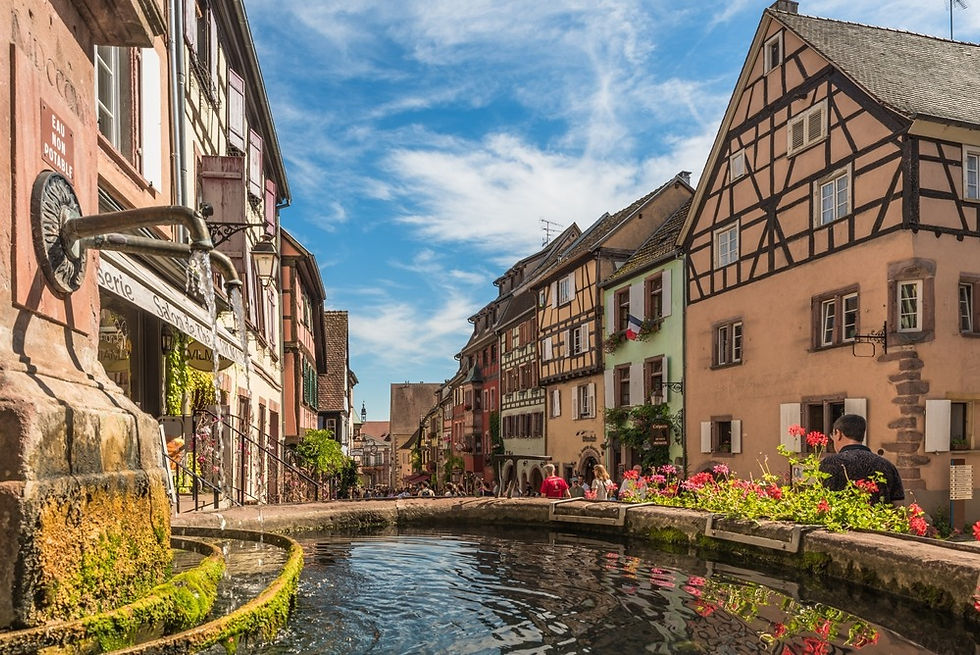
This spicy historical fact is significant: later, when she complained of being poisoned in Rome, skeptics (and the defense) would point to her Alsace failure to suggest she was merely a "hysterical" woman who reacted to the stress of convent life by developing psychosomatic illnesses.
Once inside Sant’Ambrogio, Katharina quickly sensed the "secret of Sant’Ambrogio", the illegal cult of the founder, Maria Agnese Firrao, who had been condemned by the Inquisition in 1816 but was still worshipped in the cloister. The tension escalated when Maria Luisa tried to "groom" the princess by involving her in a bizarre correspondence with a man known as "the Americano" (Peter Kreuzburg, a Tyrolean doctor). Maria Luisa claimed she was exorcising him of demons, but the letters the princess was asked to translate were filled with lewd suggestions. In one spicy and shocking letter, the "Americano" even proposed a threesome between himself, Maria Luisa, and Katharina.
Realizing that Katharina was a threat who could expose the convent’s cult and sexual practices to her influential cousins in the Vatican, Maria Luisa decided the princess had to die. She announced a vision from the Virgin Mary: the princess would soon be "called home to God". Thus began a series of cold-blooded poisoning attempts. Katharina was served beef tea that was "extremely bitter and acrid," and medication that left her in a coma.
Maria Luisa even asked a novice, the daughter of a doctor, which poison was the strongest. She began mixing ground glass into the princess’s porridge and seasoning her food with opium and belladonna. However, the princess was a "terminator" of a woman; her significant "corporal volume" (her extreme girth) likely saved her life, as the doses of poison meant to kill a smaller person were insufficient to finish her off. While on her deathbed, Katharina managed to bribe a servant to smuggle a letter to her cousin, Archbishop Gustav Adolf zu Hohenlohe-Schillingsfürst.
The Archbishop acted swiftly, using his papal authority to enter the cloister and rescue his cousin on July 26, 1859. Katharina recovered at a villa in Tivoli, where her new confessor, Maurus Wolter, persuaded her to submit a formal denunciation to the Inquisition.
The Fallout and What It Actually Means
The investigation uncovered a "story of sex and crime" that spanned decades. As the Dominican judge Vincenzo Sallua interrogated the sisters, the horrifying truth came to light: Maria Luisa had murdered before. A 20-year-old novice named Maria Agostina, who had also begun having visions and thus became a rival to Maria Luisa, had died a year earlier after being poisoned with wormwood. Another nun, Maria Felicita, who had helped Maria Luisa poison the princess, was also murdered to ensure her silence once the Inquisition began its inquiries.
The trial also exposed the role of the clergy. Joseph Kleutgen, a famous Jesuit philosopher acting under the pseudonym "Giuseppe Peters," was Maria Luisa’s lover and accomplice. He had used her "divine letters" to remove his theological rivals and had reportedly countenanced the murder attempts. He even claimed that during their sexual encounters, which involved a practice known as the "Jesuit blessing" (French kissing and fondling), he felt he was uniting with the Virgin Mary somatized in the young nun.
The "funny" and ironic part of the investigation occurred when the Inquisitors needed to find the jewelry Maria Luisa claimed was given to her by God. A witness confessed that the "divine gifts" had been panicked and flushed down the toilet. The Inquisition actually hired a mason to break open the sewers of Sant'Ambrogio, where, a day later, they fished out rings and rubies that had actually been purchased by the convent’s lawyer with embezzled funds.
The resolution of the trial was a study in institutional inequality. Maria Luisa was sentenced to 20 years of monastic imprisonment. However, Kleutgen, the high-ranking theologian who had encouraged her, was sentenced to only three years (reduced to two by the Pope), which he spent in a comfortable retreat house writing theological tracts. His career did not suffer; he was eventually recalled to help draft the dogma of papal infallibility for the First Vatican Council.
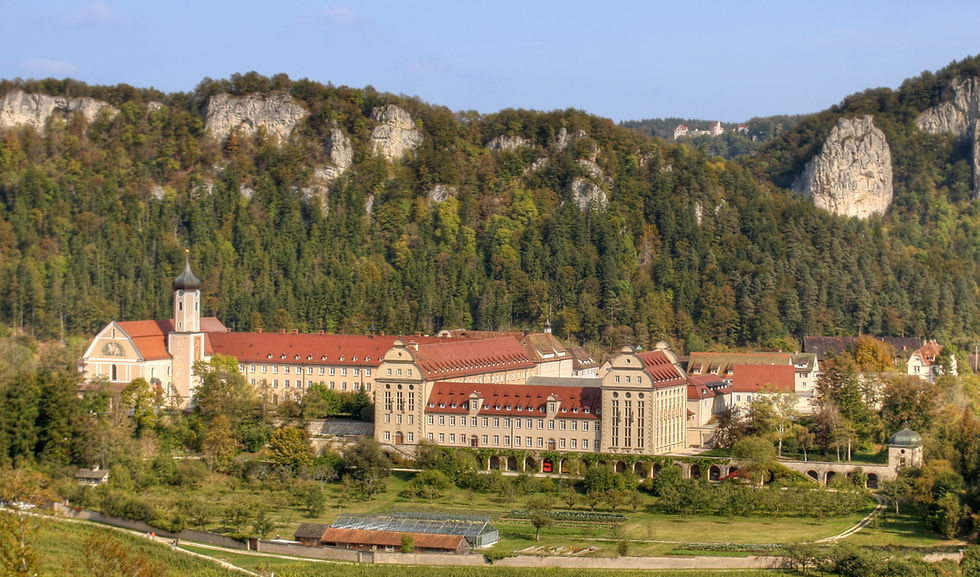
The convent of Sant’Ambrogio was dissolved. Maria Luisa eventually lost her mind in prison and spent her final years in an asylum. In a final twist of irony, she was freed by Italian unification forces in 1870 after convincing them she was a "political prisoner" of the Pope. She even successfully sued for a pension. Princess Katharina returned to Germany and used her fortune to found the Benedictine Beuron Archabbey, though notably, she founded a monastery for men, perhaps having seen enough of "female" convents to last a lifetime.
The takeaway from Sant’Ambrogio is a stark warning about the nature of power in closed systems. It shows how isolation, combined with a totalizing belief system where "the end justifies the means," can create a vacuum where common sense is replaced by "religious madness". The scandal is not just a lurid tale of "bad nuns," but a documentation of institutional abuse and the degree to which even the most educated minds can surrender to the "logic of the supernatural" to justify the most earthly of sins.
Bibliography
Hubert Wolf (Ed.), „Wahre“ und „falsche“ Heiligkeit. Mystik, Macht und Geschlechterrollen im Katholizismus des 19. Jahrhunderts, 2013.
James Powell, Introducing the Catholic Archive: Revisiting the Reception of Thomas Aquinas and the Modernist Crisis (1850-1917), 2023.
Hubert Wolf, The Nuns of Sant’Ambrogio: The True Story of a Convent Scandal, 2015.
Behnaz Zarrabi, The Law of Exorcism: A Socio-legal Study of Religiously Motivated Homicide, 2019.


